Gáldar Guide: Essential Tips to Visit Gran Canaria's Ancient Capital
🌟 Gáldar Visitor's Guide: What to See and Do in the Aboriginal Capital
🏛️ 1. Historic Center Must-Sees
Gáldar’s heart is compact, walkable, and filled with pre-Hispanic history and colonial architecture.
-
✔ Antonio Padrón House-Museum – Indigenist Art Center
A small but very special museum, ideal for understanding the indigenous influence on Canarian art. Very colorful, very unique.
-
✔ Church of Santiago de Los Caballeros
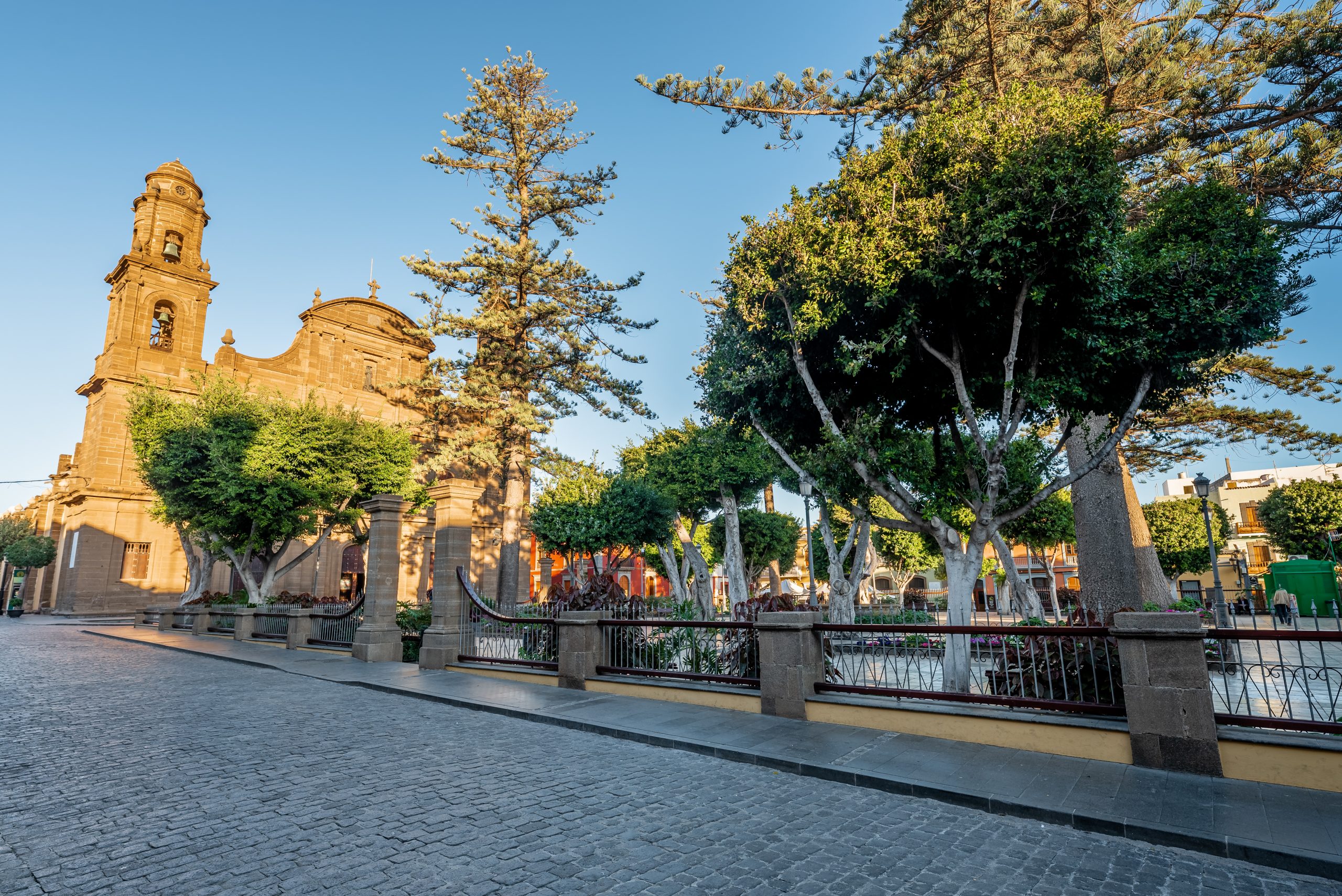
One of the most beautiful churches in the Canary Islands, featuring a spectacular neoclassical façade and a surprising interior. Furthermore, it is a key location on the Canarian Camino de Santiago.
-
Museum of Sacred Art Santiago de los Caballeros
The Museum of Sacred Art in Gáldar offers a broad display of its artistic and religious heritage, where visitors can admire the Green Font (Pila Verde), a historical treasure believed by popular tradition to have been a gift from the Catholic Monarchs. This is the piece where a large portion of the ancient Canarian population received baptism.
-
✔ Cueva Pintada – Museum and Archaeological Park
The island's archaeological gem. Here you can see authentic aboriginal cave paintings and a recreation of a pre-Hispanic settlement. Perfect for understanding pre-colonial history.
-
✔ Town Halls (Casas Consistoriales)
The Town Halls building houses the three-hundred-year-old Dragon Tree (Drago), the Tourist Office, and various artworks linked to Gáldar's history.
-
✔ Three-Hundred-Year-Old Dragon Tree (Drago Tricentenario)
Gáldar's Dragon Tree was planted in 1718 in the Town Halls building it presides over, alongside the Main Church of Santiago de Los Caballeros, forming the Historic-Artistic Site of the Plaza de Santiago. It is one of the oldest dragon trees on the island of Gran Canaria.
-
Casa de la Lana Interpretation Center (Wool House)
A small interpretation center explaining the process of obtaining, carding, and manufacturing textiles from wool, a raw material sourced from Canarian breed sheep. The central exhibit is the loom of Mariquita las Nieves, the last artisan weaver of Gran Canaria, which is over 300 years old.
-
Sardina Sea Classroom (Aula del Mar de Sardina)
The Sea Classroom at Puerto de Sardina de Gáldar is a project aimed at disseminating the historical importance of this port. It is located in a cave excavated into the cliff, which was used as a warehouse when Puerto de Sardina was frequented by numerous ships exporting goods to Europe and the rest of the archipelago. This port was the Maritime Captaincy for part of Gran Canaria for several centuries, even before the construction of Puerto de la Luz was considered, being the main port for exporting goods from the island.
-
La Recova - Municipal Market
Gáldar's market is the only municipal market still operating in northern Gran Canaria and is a great draw for visitors due to its special atmosphere with local residents doing their daily shopping and the variety of products available.
-
Town Hall Theatre (Teatro Consistorial)
The Teatro Consistorial is one of the best historic theaters in the entire Archipelago outside of an island capital. Its current construction dates back to 1912, however, its historical antecedents are situated in the reign of Isabel II, around 1847. The current building is the result of an extensive renovation inaugurated on July 18, 2010.
-
Hermitage of San Sebastián (Ermita de San Sebastián)
This is one of the oldest religious buildings in Gran Canaria, dating from the early 16th century. It represents the arrival of new architectural styles to the Canary Islands after the incorporation into the Crown of Castile. It is a Gothic-Mudejar building housing a carving of San Sebastián created by the great sculptor José Luján Pérez.
-
Cachazo and Verde de Aguilar House
The Casa Cachazo or Verde de Aguilar is a unique example of transitional Gran Canarian domestic architecture from the 17th and 18th centuries. Its name is not due to the color of its façade, but to the surname of its former owners: Juan Antonio Cachazo Osorio in the first third of the 18th century and his wife, Micaela de Quintana Verde de Aguilar. The house, now a Cultural Center located at number 13 of Guillén Morales street, has an inner courtyard formed by two wings in an "L" shape to which the upper and lower galleries and their corridors are adapted.
-
La Guancha Necropolis Archaeological Site
This is the first archaeological site with protected status in the Canary Islands, declared a Historic-Artistic Monument in 1949. The site is currently closed for works. Improvements to the surroundings and the construction of an interpretation center are planned.
-
Barranco Hondo de Abajo Historic Site - UNESCO World Heritage
Barranco Hondo is probably one of the largest troglodyte settlements in all of Gran Canaria. The imprint of human presence is absolutely perceptible practically from its headwaters, in Montaña de Los Moriscos (1772 m.), and along its entire course. Cave dwellings and artificial terraces for the cultivation of cereals, vegetables, and some fruit trees shape the dominant landscape. Now almost depopulated, Barranco Hondo was, until the mid-20th century, one of the largest inhabited troglodyte settlements in the island's highlands.
🏖️ 2. Beaches and Nearby Coastline
Gáldar has a wild and authentic coastline, much loved by locals.
-
✔ Playa del Agujero (El Agujero Beach)
Ideal for a great dip and enjoying the natural pools. It usually has a local vibe and fresh wind.
-
✔ Bocabarranco Natural Pools
Magnificent for relaxing without strong waves. A good place to go calmly and watch sunsets.
-
✔ Caleta de Abajo
A very photogenic and quiet spot, perfect for walking along the coast or watching the waves break.
-
Sardina Lighthouse (Faro de Sardina)
The old lighthouse of Sardina del Norte, on the coast of Gáldar, in the northwest of Gran Canaria, cast its first beam over this quadrant of the Atlantic on February 15, 1891. The current structure, built on the same site and replacing the old watchtower in 1986, took over the task of acting as guardian on a sublime rocky coast where vigorous waves arrive almost in slow motion, exhausted after their oceanic journey.
🌄 3. Mid-Slopes (Medianías): Nature and Routes
The municipality is not just coast; inland it has green areas and epic views.
-
✔ Amagro Natural Monument (Monumento Natural de Amagro)
The Amagro Natural Monument is a mountainous massif of 407.7 hectares, located to the northwest of Gáldar, which stands out for its exceptional geological, geomorphological, and scenic value. Declared to provide special protection to this unique formation, Amagro is an important refuge that hosts a rich diversity of endemic flora, including unique and exclusive species of the area such as the Amagro white sage (Sideritis amagroi) and the Amagro sea lavender (Limonium sventenii). In addition to its natural interest, it has cultural value due to the presence of structures related to archaeological sites.
-
✔ Montañón Negro Natural Monument (Monumento Natural del Montañón Negro)
A portion of the Altos de Gáldar (11.1 hectares) is part of the Montañón Negro Natural Monument, a natural area of great singularity and beauty. This monument is notable for its representative volcanic structures, such as the imposing Montañón Negro cone and the Caldera de los Pinos de Gáldar, both of great scientific interest. Among the pyroclastic flows stand the Pines of Gáldar, a group of centenary specimens (some over 350 years old) that survived massive logging because they formerly delimited municipal territories. The area is also a refuge for wildlife, hosting species like the Gran Canaria giant lizard and birds of prey, besides documenting 44 floral species.
-
✔ St. James Way of Gáldar (Camino de Santiago de Gáldar)
Gáldar holds a fundamental historical role in the St. James Way of Gran Canaria, the only Jacobean route outside the Iberian Peninsula with papal accreditation. This route connects the north with the south of the island, linking the churches of Santiago Apóstol in Gáldar and Tunte (San Bartolomé de Tirajana).
St. James in the Heart of Gáldar
The starting point of the route is the Church of Santiago Apóstol in Gáldar, a neoclassical temple of great artistic and historical value. Devotion to St. James dates back to the Conquest of the island, and it is here that the island pilgrimage begins. The path, upon leaving Gáldar, soon delves into the heart of the island's geography, offering the pilgrim a unique experience:
- Geological Richness: The route crosses landscapes of great value, passing by the slopes of volcanic formations and transition zones between the coast and the summit.
- Agrarian Heritage: The walker crosses traditional agricultural areas, observing the agro-pastoral landscape that has sustained life in northern Gran Canaria for centuries.
- Cultural Connection: The path is a way to connect with the island's pre-Hispanic and colonial history, following ancestral trails that today transform into a route of faith and nature.
Although it is not the original European route, the St. James Way of Gáldar offers the same promise of introspection, physical challenge, and scenic beauty as its peninsular counterpart.
-
✔ Protected Landscape of Las Cumbres (Paisaje Protegido de las Cumbres)
The municipality of Gáldar contributes 533.6 hectares to the Protected Landscape of Las Cumbres (The Summits), stretching from the Lomos de Fagajesto to the summit. This area is crucial for livestock farming in Gran Canaria, maintaining an agro-pastoral landscape that is a remnant of transhumance. Its meadows are a source of food for the livestock used to produce some of the island's most famous cheeses. Geologically, the landscape includes gems like the Caldera del Hondo de Fagajesto, a volcanic scar from an eruption 2,200 years ago. Furthermore, spots like Palominos, at the limit of the protected area, offer ethnographic value and are excellent viewpoints for observing the starry skies of the UNESCO Starlight Reserve.
-
Hondo de Fagajesto Caldera (Caldera Hondo de Fagajesto)
Within what is known as the "Recent Volcanoes of Gran Canaria" route, we delve into one of the Island's least known volcanoes. This is the "Hondo de Fagajesto" Caldera. One of the volcanoes built in the last third of the Holocene alongside Montañón Negro, the crater of Los Pinos de Gáldar, and Los Berrazales. These volcanoes belong to the recent stage of volcanism in Gran Canaria and constitute a structural axis running from northwest to southeast, where El Hondo volcano, like other volcanoes dotting the island's geography, had a double eruptive genesis.
If you enjoy hiking in nature, Gáldar is your destination. You can find the best hikes here: Hiking routes in Gáldar (Link is in Spanish).
🍴 4. Must-Try Foods
-
✔ Queso de Flor (and Media Flor) de Gáldar (Flower Cheese)
The area's star product. It has a special bitter touch thanks to the vegetable rennet from the cardoon flower. Look for it in local cheese shops or restaurants.
-
✔ Rancho Canario
A traditional, thick, and comforting stew. Perfect after a hike.
-
✔ Fresh Fish on the Coast
In Sardina del Norte (a neighboring but very close municipality), you can eat spectacular *viejas* (parrotfish), *bocinegros* (seabream), or calamari.
-
✔ Canarian Sweets
Sweet potato *truchas* (turnovers), homemade cakes (*queques*), and any dessert with *gofio* (toasted corn flour).
🍽️ 5. Recommended Restaurants
While not an exhaustive list, these are usually very popular:
- La Trastienda de Chago (Center): updated Canarian cuisine, great atmosphere.
- Gastro-Tasca Enyesque: creative tapas.
- Restaurante Grill Los Pinos (Mid-Slopes): grilled meats and homemade food.
- Bar Restaurante El Agujero (Coast): fresh fish and views.
🛍️ 6. What to Buy as a Souvenir
- Queso de flor (Flower Cheese) from Gáldar
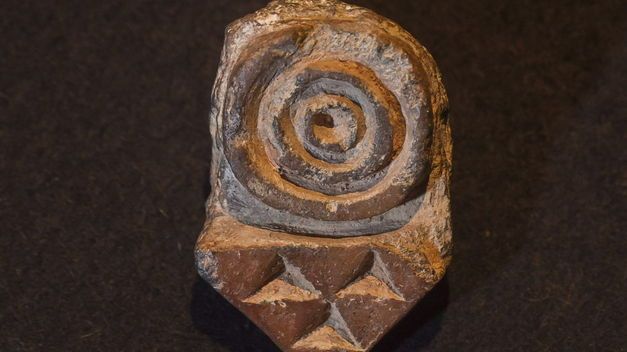
- Artisan pottery inspired by pre-Hispanic motifs
- Honey from the northern area
- Gofio (toasted flour) milled in traditional mills
📅 7. Festivals and Atmosphere
- Fiestas de Santiago (July): one of the most important festivals on the island, with concerts, pilgrimages, and cultural events.
- Bajada de la Rama de Sardina: very lively and with a popular essence.